

Introduction
Moving large construction machinery or industrial equipment requires careful planning and attention to detail. Improper handling during loading and unloading can lead to damage, delays or safety hazards. Understanding the steps involved, from site preparation to securing machinery on the trailer, helps reduce risks and keeps projects on schedule. Using the right tools, vehicles and trained personnel contributes to a smoother process. Professionals managing heavy haul equipment transport follow strict protocols to protect both equipment and personnel, minimizing costly setbacks while maintaining operational efficiency.
Prep for Loading & Unloading Heavy Haul Transport
1. Site Assessment and Preparation
Before any equipment is moved, the loading and unloading area must be carefully assessed. Adequate space is required for trucks, trailers, and machinery to maneuver safely. Obstacles such as overhead wires, uneven ground or confined spaces can complicate the process. The surface should be stable and level to prevent tilting or slipping during loading. Signage and barriers can help keep personnel and bystanders clear of the work zone. Taking time for site preparation reduces the chance of accidents and equipment damage during transport.
2. Selecting Appropriate Equipment and Trailers
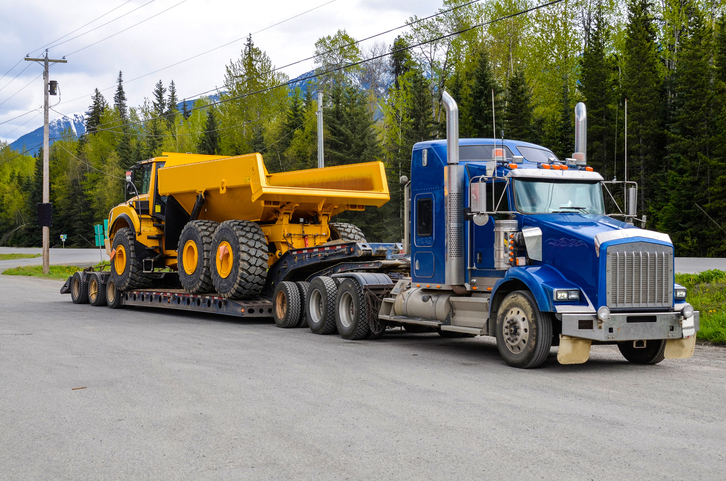
Not all trailers or carriers are suitable for every type of heavy machinery. Flatbeds, lowboys, and specialized trailers each have specific weight limits and loading configurations. Choosing the correct equipment prevents overloading, uneven weight distribution, and potential tipping hazards. Loading ramps, hydraulic lifts, and winches must match the equipment’s dimensions and weight. Inspecting these tools beforehand ensures they are in good working condition. Proper trailer and tool selection directly impacts safety and efficiency during large-scale equipment transport.
3. Proper Loading Techniques
Loading machinery requires careful alignment and stabilization. Operators must drive or lift equipment onto the trailer slowly and precisely. Weight distribution should be even across the trailer to maintain balance during transit. Securing equipment with high-quality chains, straps, and tie-downs prevents shifting or tipping. Checking connections and anchor points multiple times reduces the risk of failure on the road. Using spotters or guidance systems can assist operators in maintaining accuracy and safety throughout the loading process.
4. Safety Measures and Personnel Coordination
Communication and coordination among personnel are critical during loading and unloading. Everyone involved should understand their role, from operators to spotters and supervisors. Safety gear, including helmets, gloves, and reflective vests, is mandatory. Emergency procedures should be established in case of equipment failure or sudden movement. Clear hand signals or radio communication help synchronize movements, especially when visibility is limited. Adhering to safety measures protects both the team and the machinery during oversized load transport operations.
5. Unloading and Post-Transport Inspection
Unloading is as crucial as loading in preventing damage. Equipment should be removed slowly and steadily, following the same safety and balance guidelines. Inspect machinery for any signs of shifting, scratches or mechanical issues immediately after unloading. Documenting the condition of each unit ensures accountability and allows for prompt maintenance if needed. Properly storing or securing equipment at the destination site prevents accidents after transport. A thorough post-transport inspection maintains operational readiness and helps refine future transport procedures.
Proper preparation for loading and unloading is vital in specialized equipment shipping to prevent damage, delays, and safety hazards. Assessing the site, selecting appropriate trailers, and using proper loading techniques reduce risk. Coordination among trained personnel ensures smooth operations while protecting both equipment and staff. Safety measures and protective gear are essential throughout the process. Post-transport inspections verify the condition of machinery and help maintain long-term reliability and efficiency.
Conclusion
Handle your vehicles with care using expert enclosed exotic car transport from High End Transport. Get in touch with us at (305) 816-2255 today for secure loading, professional handling, and reliable delivery every mile.